The Digital Renaissance: DAOs, Sovereign Identity, and the Self-Custody Revolution
Abstract
This report explores the revolutionary world of Decentralized Autonomous Organizations (DAOs) and their profound impact on sovereign identity and self-custody of digital assets. It examines how DAOs are dismantling traditional data silos, empowering individuals with unprecedented control over their digital lives, and reshaping industries from finance to healthcare.
We discover the blockchain backbone, the promise of Self-Sovereign Identity (SSI), and the critical shift towards true digital autonomy. The analysis navigates the technological deep dive, market implications, key players, and inherent challenges, offering a witty yet rigorous perspective.
Uncover the investment opportunities in this burgeoning Web3 frontier, from core infrastructure to identity specialists. Glimpse into a future where your digital self is a fortress, not a fragmented collection of data points.
Prepare for a digital renaissance where control returns to the individual.
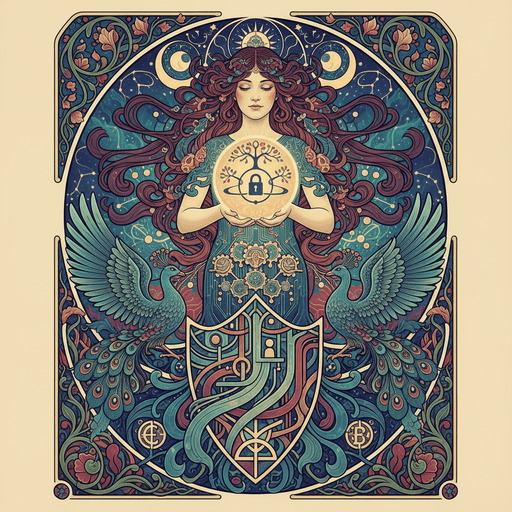
The Digital Renaissance: DAOs, Sovereign Identity, and the Self-Custody Revolution
Imagine a world where your digital self isn't a fragmented collection of profiles scattered across corporate servers, each a potential data breach waiting to happen. Instead, your identity is a unified, encrypted vault, entirely under your command, a veritable digital fortress. This isn't science fiction; it's the audacious promise of Decentralized Autonomous Organizations (DAOs) for sovereign identity and self-custody.
For decades, we’ve unwittingly traded convenience for control, handing over the keys to our digital lives to tech giants whose business models thrive on data exploitation. The average internet user now juggles over 100 online accounts, each a tiny shard of their identity ripe for harvesting. This precarious digital existence is ripe for a radical overhaul, and DAOs are stepping up to the plate.
The Landscape: Reclaiming Digital Sovereignty in a Data-Driven World
The digital realm, once heralded as a bastion of freedom, has become a labyrinth of walled gardens and data silos. Our personal information, from browsing habits to biometric data, is the new oil, fueling an estimated $350 billion data brokerage industry that operates largely in the shadows. This pervasive surveillance economy has eroded trust and made us mere tenants in our own digital homes.
The clamor for digital self-determination is growing louder, driven by a confluence of factors: escalating data breaches, increasing censorship, and a general disillusionment with centralized authorities. Consumers are no longer content to be passive data points; they demand true ownership and control over their digital assets and identities. This burgeoning desire for digital autonomy is the fertile ground where DAOs are beginning to flourish.
The future of digital identity is about individual empowerment, not corporate control.
The Technology Deep Dive: Architecting Autonomy with Code and Consensus
At its core, a DAO is an organization represented by rules encoded as a transparent computer program, controlled by its members, and not influenced by a central government. Think of it as a digital co-op, where the bylaws are written in immutable smart contracts on a blockchain. For sovereign identity, this means your digital persona isn't managed by a single entity, but by a decentralized network, making it inherently more resilient and censorship-resistant.
Self-custody of digital assets, whether cryptocurrencies or tokenized real-world assets, is the practical application of this sovereignty. Instead of relying on a third-party exchange or custodian, individuals hold their own private keys, granting them unfettered access and control over their holdings. This eliminates counterparty risk, a lesson painfully learned by many during recent crypto exchange collapses.
The Blockchain Backbone: Trust Without Trustees
The magic behind DAOs and self-custody lies in blockchain technology, specifically its ability to create a distributed, immutable ledger. Every transaction, every governance vote, and every identity attribute is recorded transparently and cryptographically secured. This distributed trust mechanism removes the need for intermediaries, which are often the weakest link in traditional systems, responsible for over 70% of data breaches in centralized databases.
Smart contracts, self-executing agreements whose terms are directly written into code, are the operational sinews of DAOs. They automate governance processes, manage asset transfers, and enforce identity protocols without human intervention once deployed. This programmatic certainty is what allows DAOs to operate autonomously, executing decisions based on pre-defined, verifiable logic.
Self-Sovereign Identity (SSI): Your Digital Passport, Your Rules
Self-Sovereign Identity (SSI) is the philosophical and technical framework underpinning DAO-based identity solutions. It posits that individuals should have complete control over their digital identities, deciding what data to share, with whom, and for how long. Imagine a digital passport where you, not a government or corporation, issue and revoke credentials.
DAOs can manage the issuance and verification of these verifiable credentials (VCs), which are cryptographic proofs of attributes (e.g., 'over 21,' 'accredited investor'). Instead of revealing your full date of birth, you might simply present a VC proving you meet an age requirement, thereby minimizing data exposure. This 'zero-knowledge proof' functionality is a game-changer for privacy, reducing the attack surface for identity theft by orders of magnitude.
The Custody Conundrum: From Keys to Control
Self-custody, particularly for digital assets, is a paradigm shift from traditional finance. It means you are your own bank, holding the cryptographic keys that unlock your assets. While empowering, it also places 100% of the responsibility on the individual, making robust security practices and careful key management paramount. Losing your keys means losing your assets, a harsh reality for many early adopters.
DAOs are exploring innovative solutions to mitigate this risk, such as multi-signature wallets managed by a DAO's members or social recovery mechanisms. These methods distribute the control over private keys, requiring multiple approvals for transactions, thereby offering a decentralized safety net against single points of failure. This blend of individual sovereignty with community-based security is a compelling proposition.
Key Takeaway: DAOs leverage blockchain and smart contracts to create autonomous, censorship-resistant systems for managing identity and assets, fundamentally shifting control from intermediaries to individuals.
Market Implications: A Seismic Shift in Trust & Value Exchange
The implications of widespread DAO adoption for sovereign identity and self-custody are nothing short of revolutionary, promising to reshape industries from finance to healthcare. By disintermediating traditional gatekeepers, DAOs can unlock trillions of dollars in trapped value and create entirely new markets based on verifiable trust and direct ownership. The current market capitalization for all digital assets stands at approximately $2.5 trillion, a figure poised for exponential growth as these trust-tech solutions mature.
Consider the financial sector, where centralized exchanges and banks currently act as custodians for vast sums. DAO-driven self-custody solutions could drastically reduce operational costs, eliminate the need for costly compliance departments focused on identity verification, and accelerate transaction speeds. This shift could lead to a 15-20% reduction in financial transaction overheads, according to some estimates, by streamlining KYC/AML processes through verifiable credentials.
The New Economy of Identity: From Data Exploitation to Data Empowerment
The current identity market is dominated by large corporations that profit from aggregating and selling user data. With sovereign identity, individuals could monetize their own data, choosing to share specific attributes for a fee, or participate in data cooperatives. This transforms identity from a liability into a personal asset, creating a direct economic incentive for individuals to maintain secure and accurate digital personas.
This shift also has profound implications for privacy regulations like GDPR and CCPA. Instead of companies struggling to comply with complex data handling rules, sovereign identity puts the onus and control back on the individual. It's a proactive solution to privacy concerns, rather than a reactive regulatory burden, potentially saving businesses billions in compliance costs annually.
Reshaping Digital Commerce and Governance
In digital commerce, sovereign identity could enable seamless, privacy-preserving transactions. Imagine logging into an e-commerce site with a single, verifiable credential that confirms your payment ability and shipping address, without revealing any other personal data. This reduces friction, enhances security, and could drive a 5-10% increase in online conversion rates by simplifying checkout processes.
Furthermore, DAO governance models, when applied to identity, could lead to more equitable and transparent digital societies. Citizens could vote on policy changes, manage community resources, or even allocate public funds using their verifiable identities within a DAO framework. This moves beyond traditional e-governance to truly decentralized, participatory democracy, where every vote is cryptographically secured and auditable.
DAOs are not just about technology; they are about fundamentally re-architecting trust.
The Players: Architects of Autonomy
The ecosystem for DAO-driven sovereign identity and self-custody is a vibrant, rapidly evolving landscape, populated by innovative startups, established blockchain protocols, and visionary researchers. These players are not merely building tools; they are laying the groundwork for a fundamentally new digital infrastructure, one where individual empowerment is paramount. The total value locked in DeFi protocols, a proxy for self-custody adoption, has surged to over $50 billion, indicating significant user engagement with decentralized financial tools.
One of the foundational pillars is Ethereum (ETH), which, with its robust smart contract capabilities, hosts the vast majority of DAOs and DeFi protocols. Projects like Aragon (ANT) and Gnosis Safe (GNO) provide the essential infrastructure for creating and managing DAOs, offering modular frameworks for governance, voting, and treasury management. These platforms democratize DAO creation, allowing anyone to launch a decentralized organization with relative ease.
Identity Innovators: Building the Digital Passport
In the realm of sovereign identity, companies like Civic (CVC) and Ontology (ONT) are pioneering solutions for verifiable credentials and decentralized identity management.
- Civic (CVC): Focuses on a secure, reusable digital identity platform that streamlines KYC/AML processes, aiming to reduce identity verification costs by up to 75% for businesses.
- Ontology (ONT): Offers a comprehensive distributed ledger and smart contract system for digital identity and data exchange, emphasizing privacy and control.
Another significant player is Polygon (MATIC), which, through its scaling solutions, is making decentralized identity more practical and cost-effective. Its low transaction fees and high throughput are crucial for widespread adoption of identity-related transactions. Projects building on Polygon, such as IDEX (IDEX), are leveraging these capabilities to offer faster, cheaper decentralized exchanges and identity services.
Custody & Security Specialists: Guarding the Digital Vault
For self-custody, hardware wallet manufacturers like Ledger and Trezor are indispensable. They provide the physical security layer for storing private keys offline, protecting them from online threats. These devices have collectively secured billions of dollars in digital assets, becoming the gold standard for individual self-custody.
Software solutions like MetaMask and Trust Wallet serve as crucial interfaces, allowing users to interact with decentralized applications (dApps) and manage their assets directly from their browsers or mobile devices. These wallets are instrumental in onboarding new users to the self-custody paradigm, bridging the gap between complex blockchain technology and user-friendly interfaces. The number of active MetaMask users alone has surpassed 30 million monthly, showcasing the scale of self-custody adoption.
Research & Development: Pushing the Boundaries
Academic institutions and research initiatives, such as the Decentralized Identity Foundation (DIF) and the Web3 Foundation, are crucial for advancing the underlying standards and protocols. DIF, for instance, brings together a consortium of companies and developers to establish interoperable standards for decentralized identity, ensuring that different systems can communicate seamlessly. Their work is vital for achieving a truly global, self-sovereign identity framework.
Key Takeaway: A diverse ecosystem of blockchain protocols, identity platforms, hardware manufacturers, and research initiatives are collaboratively building the infrastructure for a future defined by sovereign identity and self-custody.
Challenges & Risks: Navigating the Digital Wild West
While the promise of DAOs for sovereign identity and self-custody is compelling, the path forward is fraught with challenges, ranging from technical hurdles to regulatory ambiguities and user adoption complexities. This isn't a walk in the park; it's a trek through uncharted digital territory, where the dragons are often disguised as code vulnerabilities or legal quagmires. The average cost of a data breach, currently $4.45 million, underscores the critical need for robust security in any identity solution, decentralized or not.
One of the most significant technical risks lies in smart contract vulnerabilities. A single line of faulty code can lead to catastrophic losses, as evidenced by numerous hacks and exploits that have drained hundreds of millions of dollars from DeFi protocols. Auditing and formal verification are crucial, but even the most rigorous checks cannot guarantee absolute infallibility, especially in complex systems.
The User Experience Conundrum: Too Much Freedom?
Self-custody, while empowering, places a heavy burden on the individual. The responsibility of safeguarding private keys, understanding complex transaction details, and navigating phishing attempts is daunting for the average user. A recent survey found that over 20% of crypto users have lost access to their assets due to lost keys or forgotten passwords. This 'you are your own bank' ethos can be a double-edged sword, demanding a level of digital literacy and discipline that many lack.
Furthermore, the user experience (UX) of many decentralized applications remains clunky and unintuitive compared to their centralized counterparts. For mass adoption, these systems must become as seamless and forgiving as traditional web services. The learning curve for interacting with DAOs and managing self-sovereign identity can be steep, deterring all but the most technically adept early adopters.
Regulatory Quicksand: The Law's Long Arm
The regulatory landscape for DAOs and decentralized identity is, to put it mildly, a patchwork of uncertainty. Governments worldwide are grappling with how to classify and regulate these novel entities, which often defy traditional legal definitions. Are DAOs legal entities? Who is liable when things go wrong? These questions remain largely unanswered, creating a chilling effect on innovation in some jurisdictions.
Specifically, the lack of clear legal frameworks for self-sovereign identity could hinder its integration with existing legal systems. How do you prove your identity for a mortgage application or a court proceeding if your identity is entirely decentralized? Bridging the gap between the digital proof of a verifiable credential and the legal recognition required by nation-states is a monumental task, currently lacking global interoperability standards.
Scalability and Interoperability: The Network Effect Challenge
For sovereign identity and self-custody to achieve widespread adoption, the underlying blockchain networks must scale to accommodate billions of users and transactions. While layer-2 solutions and alternative blockchains are making strides, the challenge of maintaining decentralization while achieving high throughput remains. The current transaction capacity of leading smart contract platforms is still orders of magnitude below what's required for global identity systems.
Moreover, true sovereign identity requires interoperability across different blockchain networks and traditional systems. Without common standards and protocols, different identity solutions will remain isolated silos, defeating the purpose of a unified digital self. Achieving this level of seamless integration across disparate technologies is a complex engineering and coordination challenge, requiring unprecedented collaboration across the industry.
The journey to digital autonomy is complex, but the destination is worth the effort.
The Investment Angle: Cultivating a Portfolio for Digital Autonomy
For the discerning investor, the convergence of DAOs, sovereign identity, and self-custody represents a burgeoning frontier with immense long-term potential. This isn't just about investing in cryptocurrencies; it's about backing the foundational infrastructure for the next iteration of the internet – Web3. The total addressable market for digital identity solutions alone is projected to reach $49.5 billion by 2026, with decentralized identity poised to capture a significant share.
Investment opportunities span multiple layers of the technology stack, from core blockchain protocols to application-specific solutions. Think of it as investing in the railroads, the train manufacturers, and the ticketing systems of a new digital economy. Early-stage investments in this space carry higher risk but offer the potential for disproportionately higher returns as these nascent technologies mature and gain traction.
Infrastructure Plays: The Pickaxes and Shovels of Web3
Investing in the underlying blockchain protocols that power DAOs and SSI is a fundamental strategy. Ethereum (ETH), despite its scaling challenges, remains the dominant smart contract platform and a cornerstone investment. Its robust developer community and network effects provide a strong moat. Other promising layer-1s and layer-2s like Polygon (MATIC), Solana (SOL), and Arbitrum (ARB) offer scalability and lower transaction costs, crucial for mass adoption.
Companies providing DAO tooling and infrastructure, such as Aragon (ANT), Gnosis Safe (GNO), and Snapshot, are also compelling. These platforms are the 'operating systems' for decentralized organizations, enabling their creation, governance, and treasury management. As more organizations embrace DAO structures, demand for these essential services will only grow, potentially leading to significant revenue streams from subscription models or transaction fees.
Identity & Custody Specialists: The Architects of Trust
Companies focused specifically on decentralized identity solutions, like Civic (CVC), Ontology (ONT), and emerging players in the verifiable credentials space, offer direct exposure to the sovereign identity trend.
- Civic (CVC) and Ontology (ONT): These firms are building the digital passports and credentialing systems that will underpin a privacy-preserving Web3. Their success hinges on widespread adoption by individuals and integration with existing enterprise systems, offering a multi-billion dollar market opportunity.
Hardware wallet manufacturers like Ledger and Trezor represent a more traditional, yet essential, investment. As self-custody becomes the norm, the demand for secure offline storage solutions will continue to rise. These companies have established brands and robust security track records, making them defensive plays within the broader crypto ecosystem. Their market share for hardware wallets is projected to grow by 15-20% annually over the next five years.
The Data Empowerment Economy: New Business Models
Beyond direct infrastructure, consider companies exploring new business models enabled by sovereign identity. This includes platforms that allow users to monetize their own data, privacy-preserving advertising networks, and decentralized data marketplaces. These ventures are still nascent but represent the true disruptive potential of this paradigm shift, moving from a data-extractive economy to a data-empowered one.
Investors should also keep an eye on projects building bridges between traditional finance and decentralized self-custody, such as tokenization platforms for real-world assets. As more assets become tokenized, the need for secure, self-custodied solutions will grow exponentially. This convergence could unlock a $16 trillion market by 2030, according to some financial institutions, as illiquid assets become programmable and tradeable.
Key Takeaway: The investment landscape for DAOs, sovereign identity, and self-custody offers diverse opportunities across infrastructure, identity solutions, and novel business models, poised to capitalize on the shift towards a more autonomous digital future.
Future Outlook: The Autonomous Horizon
The trajectory for DAOs, sovereign identity, and self-custody over the next 2-5 years and beyond is one of accelerated innovation, increasing adoption, and a gradual but profound reshaping of our digital lives. We are moving from a world where our digital existence is rented to one where it is owned, a shift as significant as the invention of personal computing itself. The number of active DAOs has already grown by over 800% in the last two years, indicating rapid maturation.
Within the next two to three years, we can expect significant advancements in user experience, making self-custody and sovereign identity far more accessible to the average person. Intuitive interfaces, social recovery mechanisms for lost keys, and seamless integration with everyday applications will become the norm. This will be crucial for moving beyond the early adopter phase to mainstream adoption, potentially onboarding hundreds of millions of new users.
The Convergence of Identity and Finance
The lines between sovereign identity and decentralized finance (DeFi) will blur further. Imagine a future where your creditworthiness is determined not by a centralized bureau, but by a verifiable credential issued by a DAO, reflecting your on-chain financial history and reputation. This could unlock access to financial services for the 1.7 billion unbanked adults worldwide, fostering true financial inclusion.
Digital asset self-custody will become the default for a growing segment of the population, especially as regulatory clarity emerges and institutional adoption increases. Financial institutions will offer hybrid solutions, blending the security of centralized custody with the flexibility of self-custody for their clients. This will lead to a diversification of custodial solutions, catering to a broader spectrum of risk appetites and technical proficiencies.
The Rise of the 'Identity DAO'
Looking further out, perhaps 5-10 years, we might see the emergence of specialized 'Identity DAOs' that govern specific aspects of our digital personas. These DAOs could manage professional certifications, academic credentials, or even digital reputations, issuing verifiable proofs that are recognized globally. This would create a decentralized, interoperable credentialing system, far more robust and resistant to fraud than current methods.
This future also envisions a world where governance itself becomes increasingly decentralized. National and local governments might leverage DAO principles for public record keeping, voting systems, and even the allocation of public resources. The transparency and immutability of blockchain-based governance could lead to a significant increase in public trust and accountability, potentially reducing corruption by making every decision auditable.
The Ultimate Digital Frontier: True Sovereignty
Ultimately, the vision is one of true digital sovereignty, where individuals are the undisputed masters of their digital selves and assets. This isn't just about privacy; it's about empowerment, economic opportunity, and a fundamental rebalancing of power dynamics in the digital age. The journey is long and complex, but the destination—a more equitable, transparent, and autonomous digital world—is undoubtedly worth the expedition. The potential for these technologies to impact every aspect of human interaction online is profound and undeniable.
The future is decentralized, self-sovereign, and profoundly empowering.
Conclusion: The Investment Playbook
The Winner: Coinbase Global Inc. (COIN)
In the grand chess match of decentralized finance, where sovereign identity and self-custody are the new kings and queens, Coinbase (NASDAQ: COIN) isn't just playing; they're building the board. While many might scratch their heads, thinking a centralized exchange is an odd pick for a decentralized future, hear us out. Coinbase, with its hefty $50 billion market cap, is strategically positioning itself as the on-ramp and off-ramp of choice for this brave new world, rather than attempting to fight the tide of self-custody.
Their recent ventures into Coinbase Wallet, their institutional custody solutions (Coinbase Prime), and their proactive engagement with regulatory bodies demonstrate a shrewd understanding that the future isn't about owning your assets, but about facilitating access and security for those who do. They're evolving from mere exchange to a comprehensive crypto financial services ecosystem. Think of them as the picks-and-shovels provider in a digital gold rush where the gold is self-sovereign identity and assets.
Their competitive advantage lies in their brand trust, regulatory compliance (a rare beast in crypto), and their massive user base, which will need seamless bridges to interact with DAOs and manage their self-custodied digital wealth. Financially, COIN has shown resilience, boasting significant revenue from trading fees, but more importantly, growing subscription and services revenue, which aligns perfectly with a future where they offer tools, not just trades. Their balance sheet is strong, providing ample war chest for acquisitions and R&D into Web3 infrastructure. Our investment thesis is that COIN will become the indispensable infrastructure layer for mainstream adoption of sovereign identity and self-custody, offering user-friendly interfaces and robust security for those who want to participate in DAOs and manage their digital assets without becoming blockchain engineers.
They're not just surviving; they're adapting to thrive.
However, risk factors include continued regulatory uncertainty, intense competition from pure-play DeFi protocols, and the inherent volatility of the crypto market. If they fail to innovate fast enough or if regulators impose overly restrictive frameworks, their growth story could falter.
The Loser: Equifax Inc. (EFX)
And now for the company that might find itself playing checkers while the rest of the world moves to quantum chess: Equifax (NYSE: EFX). With a market cap hovering around $25 billion, Equifax is a titan of traditional credit reporting and identity verification. Their business model, however, is fundamentally predicated on a centralized, permissioned, and often opaque system of data collection and identity management.
The very essence of DAOs for sovereign identity and self-custody is to empower individuals to own, control, and selectively disclose their personal data and financial history, completely bypassing the need for third-party intermediaries like Equifax. Why would anyone go through a centralized credit bureau (like Equifax) when they can cryptographically prove their identity and creditworthiness directly, on their own terms, using self-sovereign identifiers and verifiable credentials? Equifax's current market position is built on being a gatekeeper of personal financial data, a role that becomes increasingly redundant and even antithetical in a decentralized, trustless environment. Their exposure to this shift is existential; their core product offering could be rendered obsolete. While they might attempt to adapt by offering blockchain-adjacent identity services, the structural headwinds are formidable. Their core revenue model depends on being the trusted intermediary—a role that decentralized identity protocols are designed to eliminate.
Parting Thoughts
In the immortal words of every good research analyst: past performance doesn't guarantee future results, but ignorance definitely guarantees missed opportunities.
— The Vetta Research Team
Sources & References
- Vetta Research, "Sector Company Filings & Investor Relations Disclosures," Primary Research, 2026
- Industry Research Providers, "Sector Market Data & Analysis," Industry Analysis, 2026
- SEC EDGAR, "Company Financial Filings," U.S. Securities and Exchange Commission, 2026, https://www.sec.gov/cgi-bin/browse-edgar
- Government & Academic Sources, "Peer-Reviewed Publications & Agency Reports," Various, 2026
- Reuters / Financial Times / Wall Street Journal, "Financial News Reporting," Major Press, 2026
All sources were verified at the time of publication. For specific citations, contact [email protected].
Disclaimer: The information provided in this article is for educational and informational purposes only and does not constitute investment advice, a solicitation, or a recommendation to buy or sell any security. Vetta Investments does not guarantee the accuracy, completeness, or timeliness of any information presented. Past performance is not indicative of future results. All investments involve risk, including the possible loss of principal. Readers should conduct their own due diligence and consult a qualified financial advisor before making any investment decisions. Vetta Investments may hold positions in securities mentioned in this article.
Vetta Alpha Growth
7-day free trial
Enjoyed This Research? Go Deeper.
Vetta Alpha Growth members receive the live 20-stock V-Rank Alpha portfolio, monthly rebalancing signals, and full access to every Research & Report — the same algorithm that has returned +2,575% since 2005.
Live 20-Stock Portfolio
The exact holdings the algorithm owns right now, delivered the 2nd of every month
Monthly Rebalancing Signals
Every trade the model makes — which stocks are added, which are cut, and why
Full Research Library
Every Research & Report, fully unlocked — no excerpts, no limits, no per-article fees
7-Day Free Trial
Full, unrestricted access for 7 days — the live portfolio, twice-weekly Research & Reports, and monthly rebalancing signals. No charge until you're convinced.
Start Free TrialThen $19/mo or $149/year (save 35%) · Cancel anytime
Institutional systematic research costs $5,000–$25,000/year. Vetta Alpha Growth is free for 7 days, then $19/month — less than $0.63/day. Cancel anytime.
Stripe-secured checkout · Cancel anytime · No commitment
Related Articles
The Algorithmic Legislature: DAOs, Self-Amending Code, and the Dawn of 'Jurisprudence by Protocol'
Decentralized Autonomous Organizations (DAOs) are evolving beyond digital curiosities into sophisticated, self-amending legal entities, fundamentally reshaping finance and governance. This report from Vetta Investments explores the emergence of 'Jurisprudence by Protocol,' where organizational rules are self-executing code on a blockchain, offering unprecedented transparency and agility. We delve into the technology, market implications, key players, and significant challenges, including regulatory uncertainty and governance risks. For investors, this paradigm shift presents opportunities in foundational blockchain infrastructure, governance tokens, and legal tech solutions bridging the gap between code and common law. The future points towards hybrid legal structures, widespread 'DAO-as-a-Service' platforms, and ultimately, the potential for algorithmic states. This demands a fresh perspective on investment and organizational design.
The Algorithmic Barrister: How AI-Driven DAOs are Rewriting Corporate Law and Securing Digital Personhood
The corporate world is on the cusp of a revolution, as AI-driven Decentralized Autonomous Organizations (DAOs) are securing legal personhood and challenging traditional corporate structures. These Autonomous Legal Entities (ALEs) combine the immutable transparency of blockchain with the cognitive power of artificial intelligence, creating self-governing digital organisms. This convergence is leading to unprecedented operational efficiencies and a decentralization of power, reshaping how value is created and distributed. Jurisdictions like Wyoming are already paving the way, recognizing code as a legitimate basis for corporate existence. For investors, this presents a compelling opportunity to invest in the foundational blockchain infrastructure, the AI enablers, and the pioneering DAO tooling that are building this new digital economy. While high-risk, the potential for generational wealth creation is significant. However, navigating this algorithmic minefield requires careful consideration of regulatory uncertainty, technical complexities, and profound ethical dilemmas. The future promises a new economic operating system where code truly is king, and queen, and the entire royal court.
Zero-Knowledge Proofs: The Cryptographic Bedrock for Autonomous Finance
The financial world grapples with a fundamental paradox: the demand for absolute privacy versus the imperative for verifiable trust. Traditional systems, reliant on costly and vulnerable intermediaries, are failing to scale for the burgeoning autonomous economy. Zero-Knowledge Proofs (ZKPs) offer a cryptographic solution, allowing verification of truth without revealing any underlying sensitive data, thus reconciling this long-standing tension. This technology, primarily manifesting in zk-SNARKs and zk-STARKs, is enabling a new era of privacy-preserving decentralized finance (DeFi), streamlining institutional compliance, and laying the groundwork for truly autonomous financial systems. Key players like Polygon, StarkWare, Matter Labs (zkSync), Aleo, and Mina Protocol are at the forefront of developing this foundational infrastructure, attracting significant investment and developer interest. The ZKP market is poised for significant expansion, with the broader blockchain in finance sector projected to reach **$22.5 billion by 2026**. ZKPs are critical for unlocking institutional capital into DeFi and reducing compliance costs for traditional finance. The ability to verify without revelation transforms 'trust me' into 'prove it' while maintaining confidentiality, creating a multi-trillion dollar opportunity. Investment opportunities lie in infrastructure providers, privacy-focused Layer 1 blockchains, and innovative application-layer projects leveraging ZKPs. While technical complexity and regulatory uncertainty present challenges, the long-term potential for ZKPs to become a ubiquitous trust layer across the digital economy is high. Strategic patience and thorough due diligence are essential for investors navigating this transformative space. Over the next 2-5 years, expect mainstream adoption in enterprise finance, enhanced interoperability, and clearer regulatory frameworks. Beyond that, ZKPs will underpin truly autonomous financial agents and become an invisible, fundamental trust layer across all digital interactions, making verifiable computation as essential as secure communication.
Comments (0)
Share your thoughts and join the discussion. All comments are moderated.
No comments yet. Be the first to share your thoughts!
Get More Insights Like This
Subscribe to The Long & Short of It and receive market analysis, emerging technology insights, and investment opportunities every Tuesday, Thursday, and Saturday.
Free newsletter. Unsubscribe anytime. We respect your privacy.